

IBS can cause recurring abdominal discomfort, bloating, gas, diarrhoea, constipation, or alternating bowel habits. Symptoms can fluctuate and may become worse with certain foods, stress, or irregular routines.
In Ayurveda, Grahani is associated with disturbed Agni and impaired digestion, often involving Vata, Pitta, or Kapha according to the individual pattern. When digestion and intestinal function become irregular, improperly processed food may contribute to the formation of Ama.
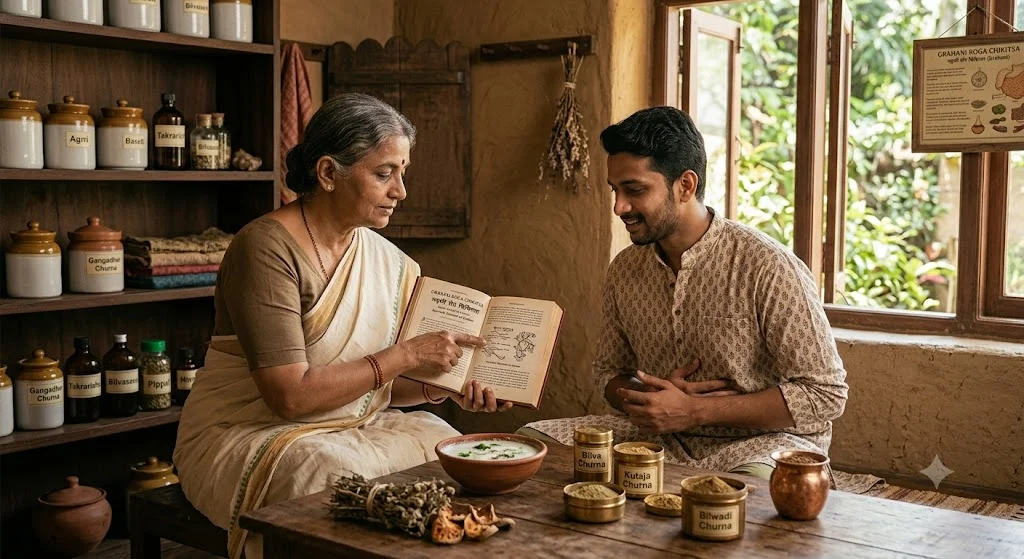
Most cases build up quietly over months of lifestyle patterns before the discomfort becomes hard to ignore.

Treatment is layered — internal herbal formulations, detox procedures where needed, and supportive therapies, sequenced to a patient's constitution.
Ayurvedic medicines are selected according to whether the dominant pattern involves diarrhoea, constipation, bloating, weak digestion, or a combination of symptoms. The goal is to support Agni and healthy intestinal function.
For selected patients, supervised Ayurvedic cleansing may be considered after assessing strength, digestion, bowel pattern, and overall constitution. Therapies are individualized rather than routinely prescribed.
A personalized diet emphasizes warm, freshly prepared, easily digestible foods suited to the individual's symptoms. Regular meals and mindful eating help create a more stable digestive routine.

Treatment holds only when daily habits support it — this is the part patients can control between visits.

Consult Dr. Mahendra Bisht for a personalized Ayurvedic treatment plan tailored to your body type.
Please provide the answer here.
Please provide the answer here.
Please provide the answer here.
Please provide the answer here.